Fence painting and staining protects the timber from sun and rain and makes the whole section look finished. Most North Shore fences are treated pine palings or slats, which take either a fence stain or an exterior paint. Stain soaks in and is easy to recoat. Paint gives a solid colour that hides patchy timber but needs more preparation each time. The fence is cleaned, left to dry, loose palings are fixed, then two coats go on by brush, roller or sprayer. Below is how to choose between paint and stain, which method suits your fence, the colours that work, and what to agree with your neighbour first.
Signs your fence needs attention
A fence needs attention when the timber starts taking in water instead of shedding it. Check the sunny side and the bottom rail first, because that is where stain fades and mould starts. Catching it early means a simple clean and recoat, rather than scraping, sanding or replacing palings later.
- Grey, weathered timber
- Paint peeling off the palings
- Green mould at the bottom rail
- Stain faded on the sunny side
- Palings split or pulling loose
- Water soaking in instead of beading
Paint or stain for a fence
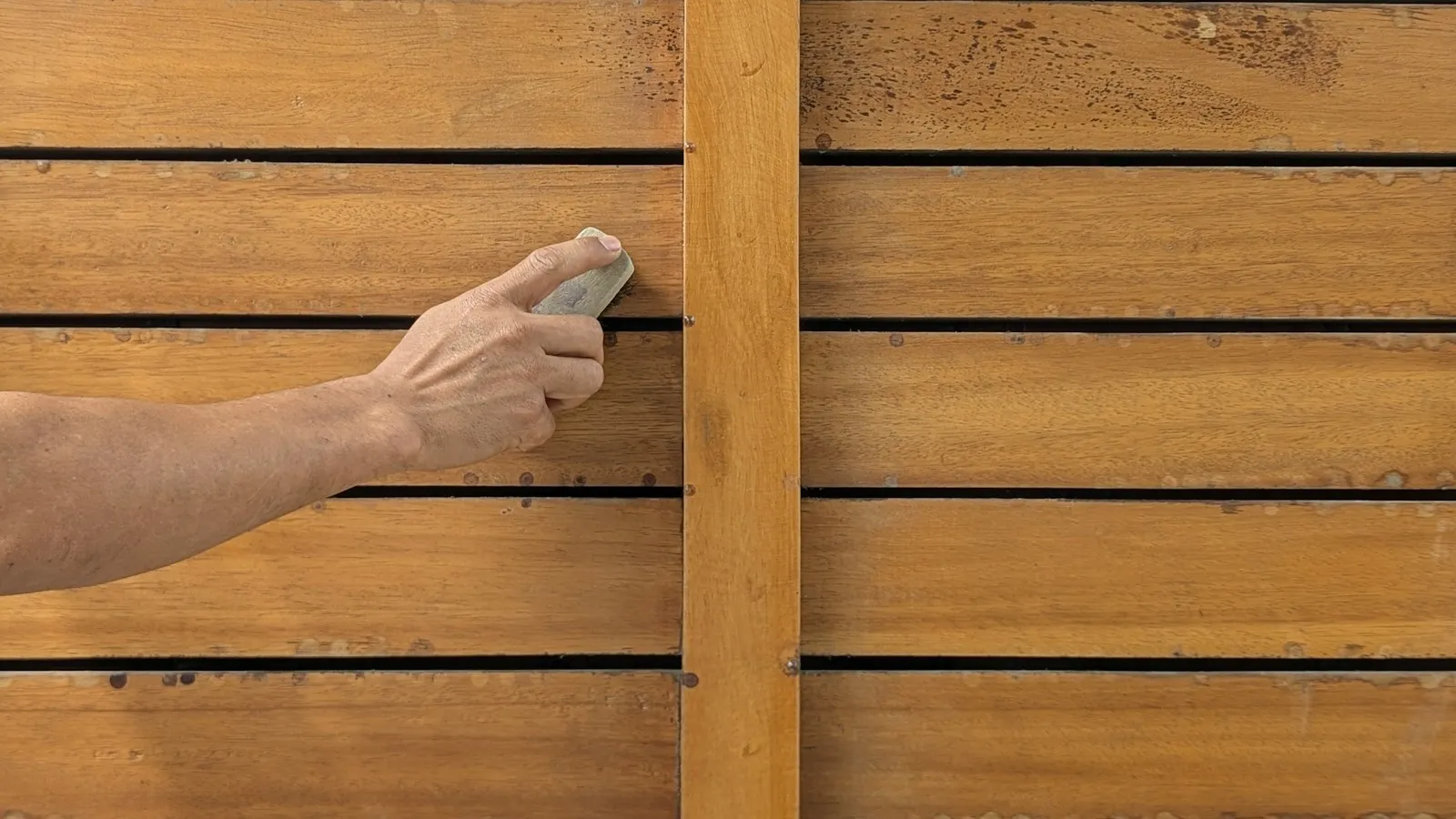
Stain suits most timber fences. It soaks into the wood, shows some of the grain, and when it fades you simply clean and recoat without scraping. Paint gives a solid, even colour and hides mismatched or patched palings, but once it starts peeling it has to be scraped and sanded before the next coat. On rough sawn palings, stain is usually the easier choice to keep up.
Fence stain
- Soaks in, shows the grain
- No peeling, easy to recoat
- Suits rough sawn pine palings
- Colour fades gradually
Fence paint
- Solid, even colour
- Hides patched or mixed timber
- Matches the house trims
- Needs scraping when it peels
Brush, roller or sprayer
A sprayer is fastest on long paling fences with lots of gaps and edges, followed by a brush to work the stain in. A roller suits flat, solid fences and wide boards. A brush gives the most control on short runs, posts and rails. Many painters spray and then back-brush, which is quick and still works the coating into rough timber.
Spraying needs calm weather and masking, because overspray drifts onto cars, plants, houses and the neighbour's side. On a boundary fence close to a neighbour's garden, brushing and rolling is often the polite choice.
Fence colours that work
Dark greens, charcoals and black-brown stains are common fence colours on the North Shore, because they fade into the garden and make plants stand out. Natural timber tones suit coastal homes. White fences look crisp but show dirt and need more washing. A fence painted to match the house trims ties the whole property together.
Garden green
Deep green fence, light house, white trims. The fence disappears behind the planting.
Charcoal
Charcoal or black stain. Modern, hides marks, suits grey and white houses.
Natural timber
A cedar or light oak tone stain. Warm, easy to recoat, suits coastal sections.
Very dark colours absorb more heat, which can make timber move. Resene's CoolColour versions of dark shades reflect more of the sun's heat.
The best time of year for a fence
Late spring through early autumn suits Auckland best, when the timber is dry and there are long, fine days. The fence must be dry before painting, so wait a few dry days after rain. Avoid hot direct midday sun, which Resene advises against for exterior paint, and evenings when dew is likely.
Letting a new fence dry first
New treated pine is often wet from the treatment process and needs time to dry before it can take stain or paint. Many painters leave a new fence for several weeks to a few months, depending on the weather and the product. Check the stain maker's label for its advice on new timber, and test a paling: if water soaks in quickly, the timber is ready.
Sharing the cost with a neighbour
For building or replacing a boundary fence, the neighbour often pays half. Consumer NZ explains that under the Fencing Act 1978 a neighbour must usually pay half of an adequate boundary fence, with some exceptions, and that a fencing notice is the formal first step if you can't agree. Painting for looks is a different matter, so agree in writing first.
Your neighbour has 21 days to respond to a fencing notice, according to Consumer NZ. If you want the neighbour's side painted too, ask them first and agree the colour. Fence installation and painting are often quoted together for a new boundary fence, which is something to raise with your fencer.
FAQs
How much does it cost to paint a fence?
A fence is priced by its length and height, whether one or both sides are done, the condition of the timber, and whether it is stained or painted. Stain on sound palings is the cheapest job. Peeling paint that needs scraping costs the most. Send the length, the height and a photo, and a painter can give you a price.
Can you paint over an already painted fence?
Yes, once loose and peeling paint is scraped off, the fence is washed and dry, and bare spots are primed. Paint over sound paint sticks well. Stain doesn't soak into painted timber, so a painted fence should stay painted unless you strip it back to bare wood first.
Do you paint fences for rentals and property managers?
Yes. Rental fences and shared driveways are common jobs, and a fresh fence is an easy way to lift a property before new tenants or a sale. Property managers can send the address details in the form, and the painter will arrange access with the tenants.
What colours should you avoid for a fence?
Bright, unusual colours can look tired quickly and may annoy neighbours on a shared boundary. Very pale colours show dirt and mould. Very dark colours hold heat, which can make timber move. A colour that suits the house and garden, and that your neighbour is happy to look at, is the safest choice for privacy and boundary fences.