Interior painting covers the walls, ceilings, doors, skirtings and window trims inside your home, and on many North Shore jobs the kitchen cabinets too. Furniture is moved to the middle and covered, floors are protected, cracks and nail holes are filled and sanded, stains are sealed, then two coats go on. Ceilings come first, then walls, then the trims and doors. Published prices put the inside of a three-bedroom home at $5,000 to $15,000 or more plus GST. This page covers how rooms are prepared, which finish suits each room, and how kitchen cabinets are painted. For the whole house, see house painting on the North Shore.
A single bedroom
$800 to $2,000 or more
Walls, ceiling, door and trims. Plus GST.
A living room
$1,500 to $3,500 or more
High stud and open plan cost more. Plus GST.
A three-bedroom home
$5,000 to $15,000 or more
Walls, ceilings and trims throughout. Plus GST.
What an interior repaint includes
An interior repaint includes moving and covering furniture, protecting floors, removing switch plates, filling cracks and holes, sanding, sealing water stains, then two coats on ceilings, walls, doors and trims. Trims and doors usually get a harder-wearing semi-gloss finish. At the end the rooms are cleaned, fittings go back and you walk round with the painter for touch-ups.
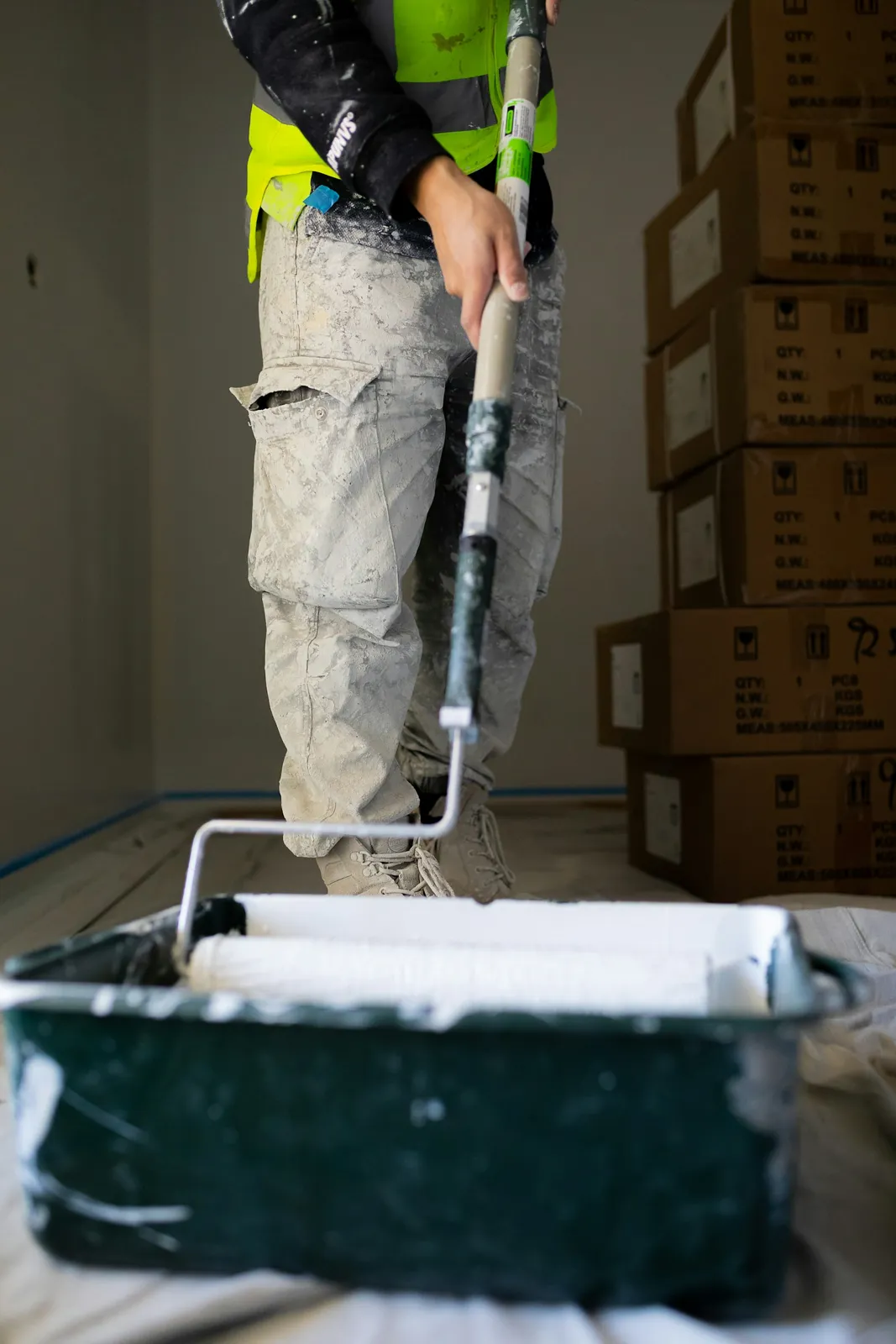
- Protect. Furniture moved and covered, floors sheeted.
- Prepare. Fill, sand, seal stains, tape edges.
- Paint. Ceilings, then walls, then trims and doors.
- Put back. Fittings on, rooms cleaned, touch-ups.
The right finish for each room
Flat or low-sheen finishes suit ceilings and living areas, because they hide small marks in the wall. Kitchens, bathrooms and laundries need a washable low-sheen or semi-gloss paint that handles steam. Doors, skirtings and window trims usually get semi-gloss or gloss, which wipes clean and takes knocks. Bathrooms often get a paint with mould resistance.
| Room | Usual finish |
|---|---|
| Ceilings | Flat |
| Living rooms and bedrooms | Low sheen |
| Kitchens, bathrooms, laundries | Low sheen or semi-gloss, washable |
| Doors, skirtings and trims | Semi-gloss or gloss |
Kitchen cabinet painting
Painting kitchen cabinets is one of the cheapest ways to change how a kitchen looks, as long as the doors and carcasses are sound. Doors are usually taken off, degreased, sanded, primed with an adhesion primer for the surface, then given two coats of a hard-wearing enamel. The hinges and handles go back once the paint has cured.
Cabinets that paint well
- Solid timber doors
- Painted MDF in good condition
- Doors with a sound, unchipped surface
- A layout you are happy to keep
Cabinets better replaced
- Swollen or water-damaged doors
- Peeling vinyl wrap
- Broken carcasses or drawers
- A layout that no longer works
Kitchen cabinet painting takes longer than most people expect, because each door is painted on both sides and needs time to dry between coats. Expect the kitchen to be partly out of action for several days. Ask the painter whether the doors are sprayed in a workshop or painted on site, and how long the finish needs before normal use.
How long an interior takes
A single room usually takes one to two days, including preparation and drying time. A typical three-bedroom interior takes about a week. Homes with lots of trim, high ceilings, stairwells or wallpaper to remove take longer. Painters usually work room by room so you can keep living in the house.
Staying at home during the work
You don't need to move out. Most interiors are painted while the family lives at home. The painter works room by room, keeps one area usable and cleans up at the end of each day. Modern waterborne paints have little smell compared with older solvent paints. Bedrooms are often painted early in the day so they can air out before night.
Lead paint inside heritage homes
Health New Zealand advises presuming lead in paint on homes from before the 1980s until a test shows otherwise. Inside, that often means doors, skirtings and window frames. Lead dust from sanding is the risk, especially for children. A careful painter tests first, uses wet sanding, contains the dust and cleans up thoroughly.
FAQs
What is a fair price to paint a bedroom?
Published Auckland prices put a single bedroom at about $800 to $2,000 or more plus GST, for walls, ceiling, door and trims. A small bedroom with sound walls sits at the low end. Repairs, wallpaper removal, colour changes from dark to light and lots of joinery push it up. See house painting prices for every range.
Do you remove wallpaper before painting?
Usually, yes. Paint over wallpaper can bubble and lift, and the seams show through. Removing wallpaper and repairing the lining underneath adds time to the job, so mention it when you ask for a quote. Some old wallpapers sit over lining that needs patching before it can be painted.
Can I choose different colours for every room?
Yes. Extra colours add a little time for cutting in and changing over, but most painters are happy to do it. Try your colours with testpots or A4 drawdown swatches on the wall before you decide, because colour looks different in each room's light. See colour ideas for help choosing.
Should walls and ceilings be the same colour?
They can be. Many homes use white or a pale tint on the ceiling so rooms feel taller and brighter. Painting walls and ceiling the same soft colour makes a small room feel calmer and hides the line where they meet. A darker ceiling works in rooms with high studs.